


Where Should You Not Use a Moss Wall? A Practical Guide for Interior Designers
Preserved moss is one of the most adaptable natural finishes available to interior designers. It introduces texture, depth and a biophilic character without the irrigation, drainage or plant lighting required by a living wall. But that flexibility can make it easy to assume that preserved moss will work anywhere.
It will not. A moss wall for commercial interiors performs best when the surrounding conditions respect the material. Direct sunlight, water, excessive heat, repeated touching and unsuitable wall locations can all shorten its useful life or compromise its appearance. For designers, understanding those limits is as important as choosing the colour or composition.
The question is therefore not simply, where can a moss wall go? A better question is, what conditions does the wall need in order to remain visually consistent and appropriate for the space?
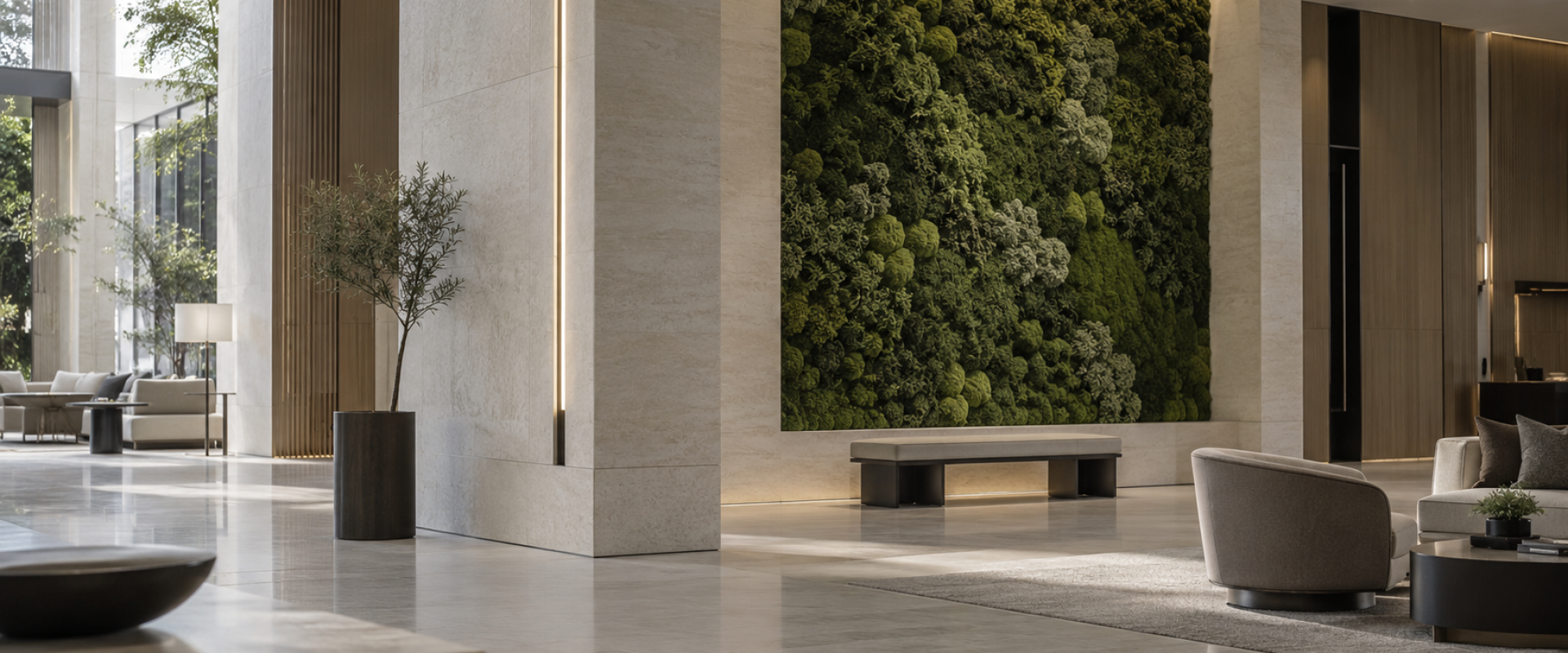
Why location matters with preserved moss
A preserved moss wall is made from real botanical material that has been treated to retain its natural form, texture and colour. It is no longer actively growing, which is why it does not need soil, watering, pruning or supplementary plant lighting.
That also means the material cannot respond to environmental stress in the same way as a living plant. If a living plant receives too much light or too little moisture, a horticulturist may be able to adjust its care. Preserved moss is a finished natural material, so its location needs to be considered correctly from the beginning.
This distinction is especially important in UAE interiors, where strong glazing, intense sunlight, air conditioning, hospitality operations and frequent cleaning can create very different conditions within the same building.
Where a moss wall for commercial interiors should not be used
1. Walls exposed to direct sunlight
A preserved moss wall should not be positioned where strong direct sunlight falls across it for prolonged periods. The issue is not whether the wall looks attractive in daylight. The issue is long term exposure.
Preserved botanical materials are best protected from direct sun because sustained exposure can affect colour and texture over time. In a lobby with full height glazing, for example, a wall that receives strong afternoon sun may be less suitable than an internal wall only a few metres away.
This is why window orientation and the path of sunlight should be considered during specification, rather than after the moss wall design has already been approved.
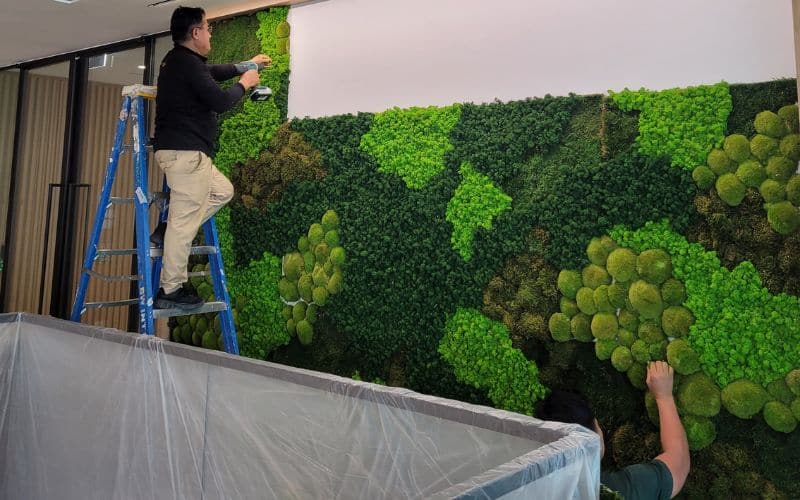
2. Exterior and semi exposed locations
Preserved moss is intended for indoor use. It should not be treated as an exterior landscape material or used in locations that are regularly exposed to rain, wind, dust or uncontrolled outdoor humidity.
This includes spaces that can look interior in drawings but behave more like exterior environments in operation, such as open entrance vestibules, uncovered terraces, outdoor restaurant zones and semi enclosed arrival areas.
If the design intent is to create a natural vertical feature in one of these areas, another planting or landscape solution should be evaluated instead of forcing a preserved material into unsuitable conditions.
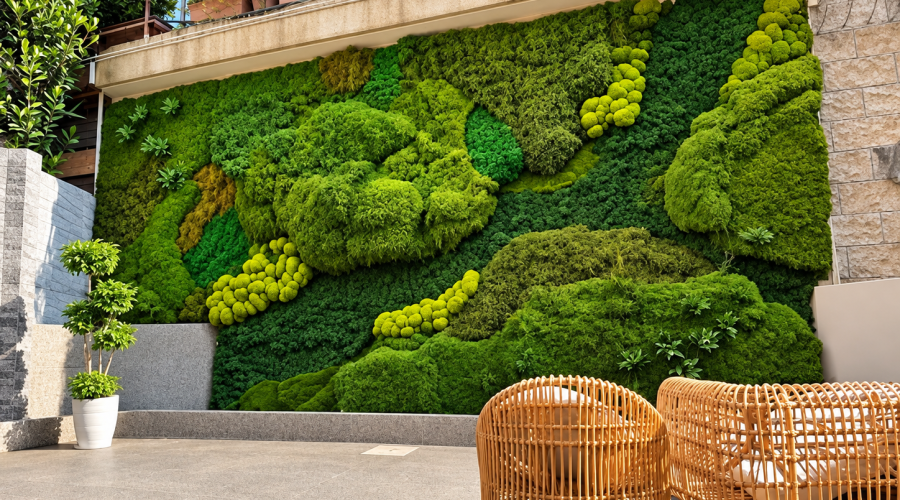
3. Wet areas and locations exposed to water
A moss wall does not need watering. In fact, preserved moss should be kept away from direct water exposure.
That makes shower areas, splash zones, wet spa rooms and walls immediately beside water features poor candidates unless the actual wall position is completely protected from moisture. The same thinking applies to locations where cleaning procedures involve frequent spraying or washing of adjacent surfaces.
In hospitality interiors, this distinction is useful. A moss wall may work beautifully in a spa reception or relaxation lounge while being unsuitable inside the wet treatment zone itself.
4. Areas that people will touch repeatedly
Moss has a tactile quality, which naturally makes people want to touch it. In high traffic commercial interiors, however, repeated physical contact can compress or disturb the preserved material.
A feature wall immediately beside a queue, narrow corridor, children’s activity area or frequently used bench should therefore be considered carefully. The solution may be to reposition the wall, raise the moss composition above normal hand level, introduce a subtle architectural setback, or choose another finish for the most exposed section.
The objective is not to make the feature inaccessible. It is to protect the material from continuous mechanical stress while keeping the design visually connected to the space.
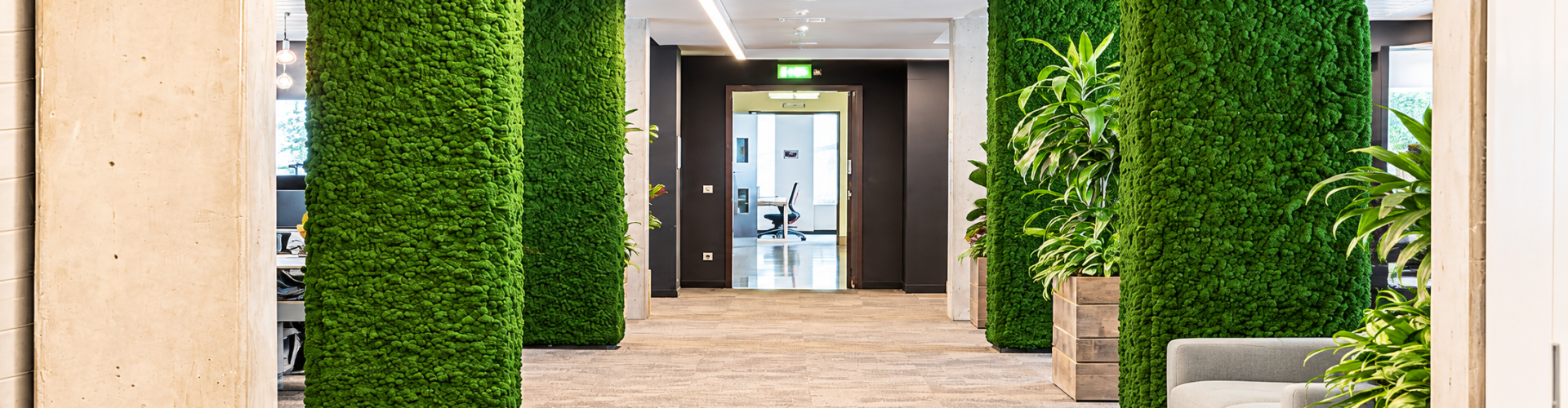
5. Locations close to strong heat sources
Preserved moss should also be kept away from intense heat. A wall directly beside a high output heater, hot equipment or another concentrated heat source may not provide the stable conditions the material needs.
This matters particularly when a moss feature is being integrated into joinery. The visual composition may appear simple on an elevation, but what sits behind or beside the wall still matters. Lighting equipment, services and adjacent technical elements should be reviewed before the moss is detailed into the final finish.
6. Surfaces that need frequent service access
A moss wall should not be used to hide a wall that must be opened regularly. Service panels, control points, access doors and frequently inspected building components need to remain practical to reach.
A designer can still integrate moss around these requirements, but they should be resolved deliberately. Removable panels, concealed access or a revised composition can preserve the visual idea without turning routine building access into a maintenance problem.
This is less about the moss itself and more about good coordination. A decorative feature should support the interior, not make the building harder to operate.
Where preserved moss works particularly well
Once unsuitable conditions are ruled out, preserved moss becomes a highly versatile interior material. It works especially well on internal feature walls where light and moisture are controlled and where the wall can be appreciated without constant physical contact.
Reception backdrops, boardrooms, lift lobbies, meeting rooms, office collaboration zones, hospitality corridors and selected restaurant interiors can all be strong locations. Moss is also useful where the design calls for natural texture but there is no practical reason to introduce irrigation or plant lighting.
Because preserved moss can be composed in different colours, densities and textures, the final result can range from restrained and architectural to deeply sculptural. The location should help determine which direction is appropriate.
What interior designers should check before specifying a moss wall
A good specification goes beyond selecting a moss colour from a sample. For a moss wall for commercial interiors, suitability depends as much on location and exposure as it does on colour and composition. The wall conditions and surrounding architecture should therefore be reviewed as part of the design decision.
Before approval, designers should consider the direction of natural light, the possibility of direct sun, proximity to water or heat, expected physical contact, the condition of the substrate, fire performance requirements, edge details, access panels and how the feature will meet surrounding joinery or stone.
Viewing distance also matters. A fine, even composition can work beautifully in a meeting room where the wall is seen close up. A larger hospitality wall may need stronger depth and texture so that the material still reads from across the space.
Sampling is valuable because preserved moss is a natural material. Colour, texture and density should be understood in relation to the actual finishes around it, not judged in isolation.
Moss wall, living green wall or artificial planting?
Sometimes the most useful outcome of a site review is deciding that a moss wall is not the right solution.
A living green wall may be more appropriate when the project specifically wants active planting and the required irrigation, drainage, lighting and maintenance can be supported. Artificial planting may suit a location where environmental exposure or physical contact makes preserved material impractical but a planted visual effect is still required. In other areas, stone, timber or another architectural finish may simply be the more suitable choice.
The material should follow the conditions of the space, not the other way around.
How Plantscapes approaches moss wall specification
At Plantscapes, moss wall projects begin with a review of the available space and the intended design direction. Samples help establish the appropriate colour and texture before the final design, quotation and installation are confirmed.
This process is important because preserved moss is not simply a decorative sheet applied to any wall. The location, wall dimensions, edges, surrounding materials and exposure all influence the final result.
For wider interior planting packages that combine preserved features with live plants elsewhere in the project, access to Wahat Al Sahraa Nursery also supports the broader plant selection and supply process.
The better question is not where can moss go
Preserved moss is valued because it brings genuine natural texture into interiors without the operational requirements of a living wall. Its simplicity, however, depends on choosing the right location.
Direct sun, water, outdoor exposure, strong heat and repeated touching should all influence the decision. So should practical issues such as service access and the way the feature meets surrounding finishes.
When those conditions are considered early, a preserved moss wall can feel calm, integrated and intentional rather than added as an afterthought. For interior designers, that is the real value of understanding where not to use one.
A Better Specification Creates a Better Finished Space
For advice on a specific indoor planting project, Plantscapes can support plant selection, specification, supply, installation and ongoing care across commercial and hospitality interiors in the UAE.
Click Here