



An indoor planting installation may look complete once the final planter is positioned, but the operational responsibility is only beginning. Facilities teams need more than a finished space. They need clear records, defined responsibilities and a maintenance plan that explains how the planting will be cared for after handover.
A well prepared indoor plant handover checklist helps FM and procurement teams understand what has been installed, who is responsible for ongoing care, how replacements will be managed and what access the maintenance team will need. This reduces uncertainty after project completion and gives the planting a stronger foundation for long term performance.
Why indoor planting needs a formal handover
Indoor plants are living assets. Their condition can change with light, air conditioning, watering, access and the way the surrounding space is used. The FM team should understand the original design intent, the selected plant material and the maintenance approach from the first day of operation. A structured indoor plant handover checklist gives everyone the same operational reference from the start.
1. A clear plant inventory
The handover should include a record of the plants supplied, their locations and the relevant planter information. For larger projects, this may be organised by floor, zone or room so individual items can be identified easily.
The inventory should reflect the final installed condition rather than an earlier tender schedule. If substitutions were approved during procurement, the final record should show what was actually delivered. This becomes especially useful when a replacement is needed later.

2. Plant condition at handover
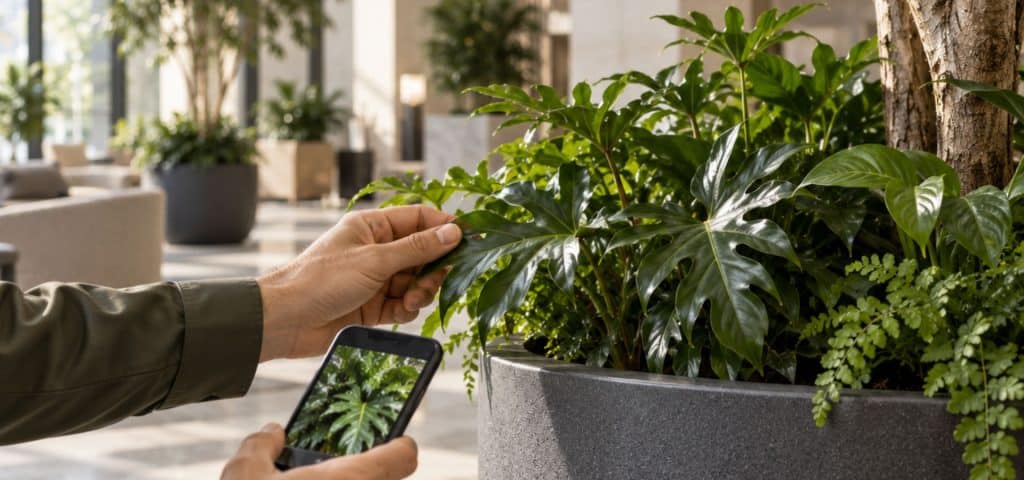
A simple condition review creates a clear starting point for both the client and the maintenance provider. Plants should be checked for general appearance, foliage condition, stability, planter cleanliness and visible signs of stress. Photographs can be useful on larger projects or where individual specimens were specifically approved.
3. The maintenance scope and visit frequency
FM teams should know exactly what the maintenance service includes. Plantscapes professional plant maintenance can include scheduled visits, watering, feeding, pruning, foliage cleaning, pest and disease inspection, repotting where necessary and replacement of plants that show signs of decline.
The handover should also confirm visit frequency and agreed service windows. In offices, hotels, healthcare environments and other operational spaces, maintenance may need to take place at quieter times to reduce disruption.
4. Replacement responsibilities
Replacement terms should be understood before an unhealthy plant needs to be changed. The FM team should know which replacements are included within the maintenance agreement, what exclusions may apply and how a replacement will be approved where a particular size or specimen is required.
Plant availability can change over time. Where an exact match is not available, access to established nursery stock through Wahat Al Sahraa Nursery can support the review of suitable sizes or alternatives while keeping the original planting intent in mind.
5. Access, water and working space
A maintenance team needs practical access to the plants it is expected to care for. The handover should identify access restrictions, security procedures, permitted service times and locations where water can be obtained.Built in planters, tall specimens and planting positioned around furniture also need enough working space for pruning, cleaning and eventual replacement. If access is difficult, FM should know this before routine maintenance begins so the service method can be planned accordingly.

6. Planter and drainage information
Plants and planters function as one installation. The FM team should know whether decorative planters contain liners, internal pots, drainage provisions or other details that affect watering and maintenance. Any known limitations should be documented clearly so technicians can care for the plants correctly and protect surrounding finishes.
7. Contacts and escalation
A handover should make communication simple. FM teams need a clear contact for routine maintenance questions and a defined escalation route for issues that need supervisory attention. On larger sites, one communication route also helps avoid duplicated requests.
Indoor plant handover checklist for FM teams
Before accepting the planting package, confirm that the final plant inventory is available, plant condition has been reviewed, the maintenance scope is understood, visit frequency is agreed, replacement responsibilities are clear, access arrangements are documented, planter and drainage details are known, and service contacts have been shared.
The checklist should be adapted to the scale and complexity of the project. A small office may require only a concise record, while a hotel, corporate headquarters or multi floor commercial interior may benefit from a more detailed zone based handover.
Handover is the beginning of plant care
A successful indoor planting project does not end when installation is complete. Handover is the point where design intent, plant quality and operational care need to connect.
For facilities teams, a clear indoor plant handover checklist creates visibility around what has been installed and how it will be maintained. For the planting itself, it helps establish consistent care from the first service visit onward.
Plantscapes supports indoor plant supply and installation together with ongoing maintenance, allowing project teams and FM teams to move from installation into routine plant care with clear responsibilities and continuity.