


Statement Plants vs Plant Groupings: What Works Better in Commercial Interiors?
A single mature plant can anchor a lobby, while a carefully layered grouping can soften seating areas and create depth. The choice is not about whether one plant is better than several. It is about what the space needs the planting to accomplish.
For architects and interior designers, statement plants and plant groupings create different visual effects and require different amounts of floor space, maintenance access and coordination. Understanding those differences helps planting feel intentional rather than something added simply to fill an empty corner.
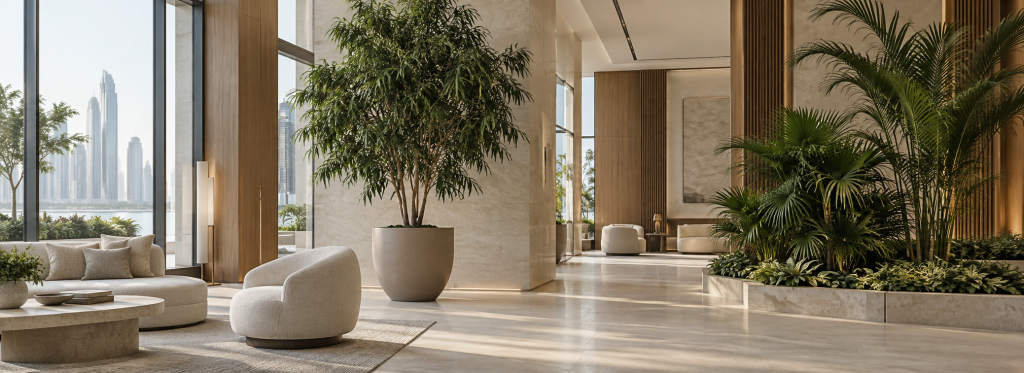
What makes a statement plant?
A statement plant is one specimen selected for its architectural presence. A mature Ficus Alii, for example, can introduce height and structure without needing other plants around it. Its silhouette becomes the focal point, so canopy spread, stem form and planter proportion are especially visible. It works well beside a reception desk, at an entrance or in a generous corner where it has room to be appreciated.
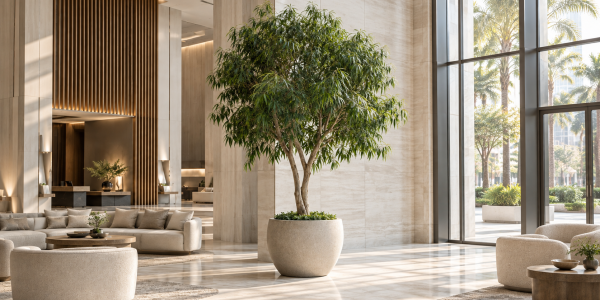
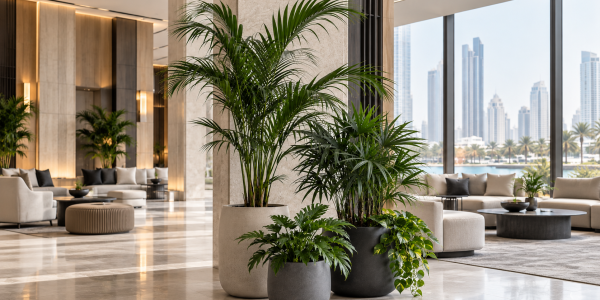
What defines a plant grouping?
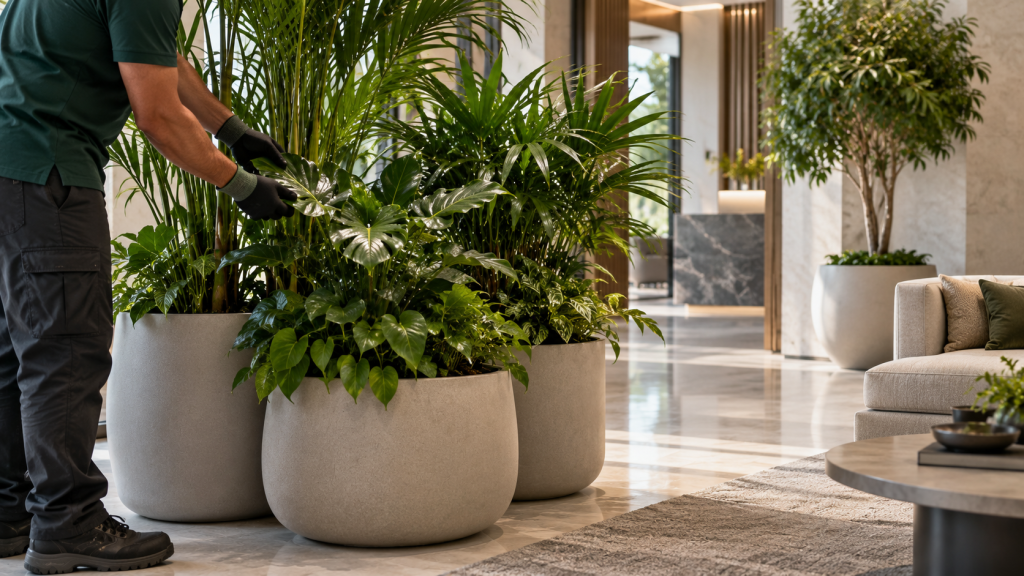
A grouping brings several plants together as one composition. Tall specimens establish height, medium plants add volume and lower foliage softens the base. Combining a Kentia, Rhapis and complementary foliage can create a layered effect, provided their growing requirements are compatible. The aim is a balanced arrangement with a clear hierarchy, not simply more pots placed together.
How statement plants and plant groupings change a space
One specimen creates a focal point and preserves negative space. A grouping occupies a wider visual field, softens long elevations and can help define seating or collaboration zones. Neither approach is automatically more premium. An undersized statement plant may disappear within a large lobby, while an overcrowded grouping can compete with furniture and architectural details.
When should you choose a single specimen?
Choose a statement plant where visual restraint matters or where one strong vertical element is needed. It can balance a large reception desk, soften a structural column or bring height to a lounge without filling the entire floor area. An upright form may also work better near circulation routes, provided its mature canopy remains clear of nearby furniture and walkways.
When does layered planting work better?
Groupings suit larger lounges, workplace breakout areas and spaces that need a softer transition between functions. They offer greater scope to combine textures and create depth at close viewing distances. A composition might use one taller palm, a medium Ficus and compact foliage. Keep enough separation between plants so their forms remain visible and the arrangement can be maintained properly.
Groupings also need a clear boundary. A long integrated planter may work better than scattered pots in a busy hospitality lounge, while separate containers offer flexibility when the furniture layout is likely to change.
Consider scale, viewing distance and circulation
A statement specimen should be assessed against ceiling height, nearby furniture and the distance from which it will be seen. A small grouping may look detailed up close but lose definition across a large atrium. Before finalising either option, review the planting layout against door swings, walkways, sightlines and cleaning access. The right arrangement supports movement rather than interrupting it.
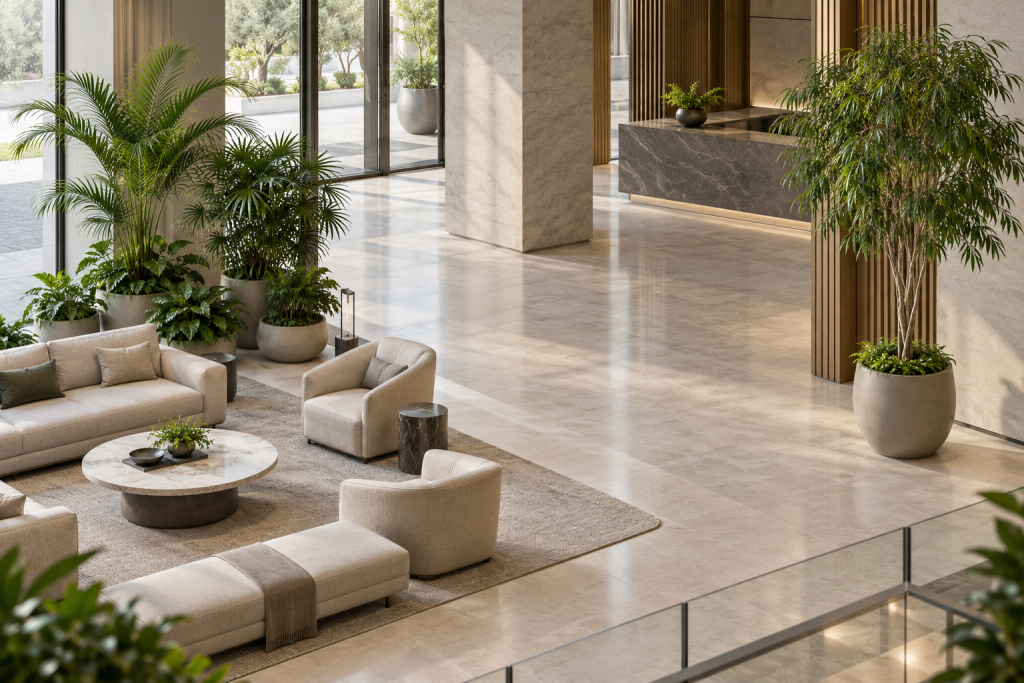
Review the plan from more than one viewpoint. What looks balanced in a visualisation may appear crowded from the entrance, particularly when foliage extends into the foreground or partially conceals directional signage.
Planters and maintenance complete the composition
A statement plant needs a proportionate planter that supports its form. For groups, repeating one material in different sizes can establish visual consistency without making the arrangement look uniform. Consider root space, drainage and access alongside the finish. One specimen needs careful monitoring, while a grouping introduces several plants that may grow and use water at different rates. Regular professional plant maintenance helps preserve both the health and the intended shape of the installation.
A grouping also benefits from a care plan that allows individual plants to be reached and replaced without disturbing the entire composition. Maintenance practicality should be reviewed before final planter positions are approved.
Make the final decision using real specimens
Two plants of the same species and stated height can still differ in canopy width, density and maturity. Review current photographs or approved nursery samples before committing to a design. The indoor plant catalogue provides a starting point for exploring different plant categories, while Wahat Al Sahraa Nursery offers access to wider nursery capability when projects require varied sizes and quantities.
For indoor plant supply and installation, a useful rule is to choose a statement plant when the space needs one clear focal point, a grouping when it needs texture across a wider area, or both when the layout has a defined visual hierarchy.
Design for lasting impact
The choice between statement plants and plant groupings is ultimately about proportion, not plant count. A hotel lobby may benefit from one mature specimen at arrival and smaller groupings near seating. Plantscapes works with project teams to match plant selection, planter scale and long term care to the character and operation of each interior.