


How Indoor Plants Are Specified: Understanding Height, Spread, Pot Size and Plant Form

A plant name tells you what the plant is. It does not tell you what should arrive on site. Two Ficus Alii plants can share the same species name and even the same stated height, yet look completely different once installed. One may be narrow and lightly branched, another may be dense and broad, while a third may have several stems and a much stronger architectural presence.

That is why a clear indoor plant specification matters. For architects, interior designers, consultants and procurement teams, the specification is what translates design intent into measurable expectations. Height is only one part of the picture. Spread, nursery pot size, stem structure, density, maturity and overall form all influence how a plant occupies a space and how successfully it integrates with the surrounding interior.

Understanding these details also makes plant approvals more meaningful. Instead of comparing only species names and prices, project teams can evaluate whether the proposed plant actually suits the scale of the space, the selected planter, circulation needs and the overall visual character.

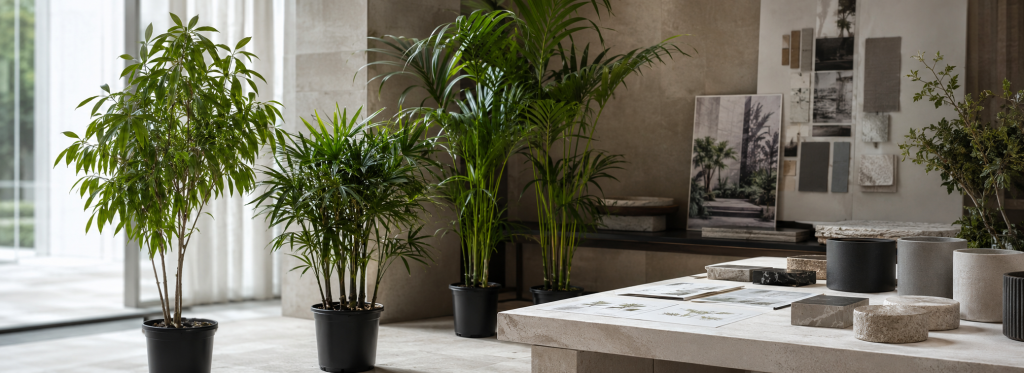
Indoor plant specification review showing different plant heights, forms and canopy spreads in a UAE design studio

A Plant Name Is Only the Starting Point

Species selection is important because it determines the plant’s basic growth habit, light preference and environmental suitability. But within the same species, plants grown in nurseries can vary significantly in silhouette and maturity.

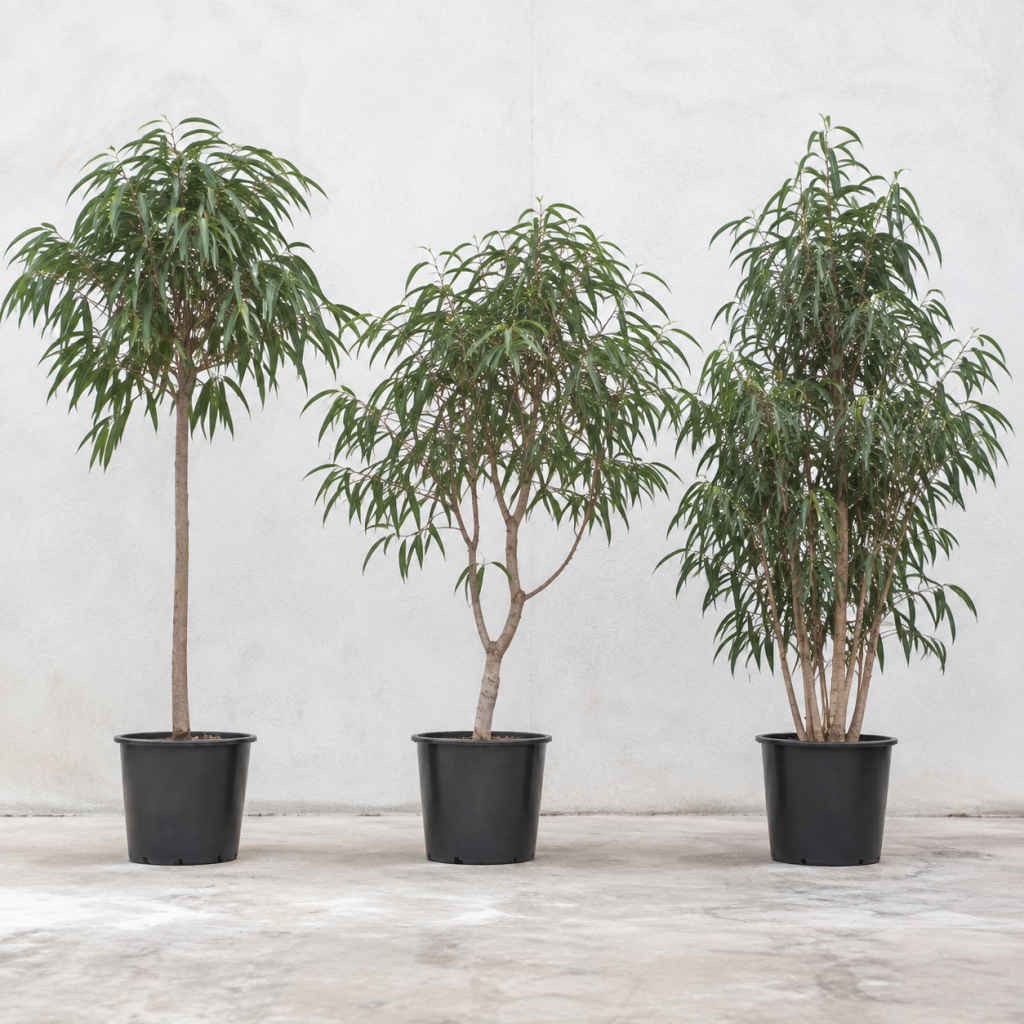
A Rhapis Palm, for example, may be supplied as a relatively open cluster of canes or as a dense, established specimen with a fuller screen effect. A Ficus Alii may be trained as a tree with a single stem, a branched specimen or a form with multiple stems. Those differences change how the plant reads within an interior.

For a commercial project, the goal is therefore not simply to name the plant. The goal is to describe enough of its physical character that the supplier, consultant and design team are working from the same set of expectations.

What an Indoor Plant Specification Should Include

A useful specification should describe the characteristics that are most important to the design rather than relying on species and height alone.

The exact level of detail will vary depending on whether the plant is a tabletop accent, part of a repeated floor planting scheme or a large statement specimen. Plants that play a prominent visual role usually require tighter parameters because small differences in form can noticeably change the finished space.

  • Botanical name and accepted variety or cultivar where relevant
  • Target plant height with a clearly stated measurement reference
  • Approximate canopy spread or overall width where this affects the design
  • Nursery pot diameter or root ball size where planter coordination is important
  • Required plant form, such as a single stem, multiple stems, clustered canes or a branched specimen
  • Minimum density or maturity where fullness is visually important
  • General quality requirements, including balanced growth, healthy foliage and no visible signs of pests or disease
  • Approval method for statement plants, such as photographs, samples or a nursery inspection

1. Height: Define What Is Being Measured

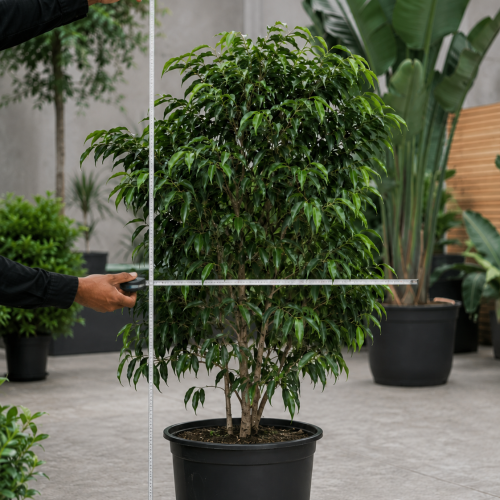
Height seems straightforward, but it can become ambiguous if the schedule does not explain the measurement basis. Some project teams refer to plant height from the growing medium to the highest natural point of foliage. Others discuss overall installed height, which may include the nursery pot or decorative planter.

Those are not the same measurement. A plant described as 200 cm tall can create a very different finished composition depending on whether that figure represents the plant itself or the complete plant and container assembly.

For statement plants, it is useful to confirm both the required plant height and the intended finished height within the decorative planter. This is especially important beneath ceilings, beside artwork, near lighting features or where a tree canopy is expected to align with architectural elements.

Horticultural specialist measuring indoor plant height and canopy spread for a commercial plant specification

2. Spread: The Dimension That Is Often Missed

Height tells you how tall a plant is. Spread tells you how much space it occupies.

This matters in reception areas, corridors, restaurants, hotel lobbies and offices where planting sits beside furniture or circulation routes. A broad plant can project into a walkway even when its planter fits comfortably within the allocated footprint. A narrow specimen may meet the required height but feel too small in scale for a large atrium or lobby.

For palms and branched specimens, canopy spread can be particularly important. The specification does not always need to prescribe an exact centimetre measurement, but it should communicate when a full, balanced or deliberately narrow form is required.

3. Nursery Pot Size: More Than a Container Measurement

The nursery pot is the container in which the plant is cultivated and transported. Its diameter gives the project team an indication of the root volume and, importantly, whether the plant can be accommodated inside the selected decorative planter.
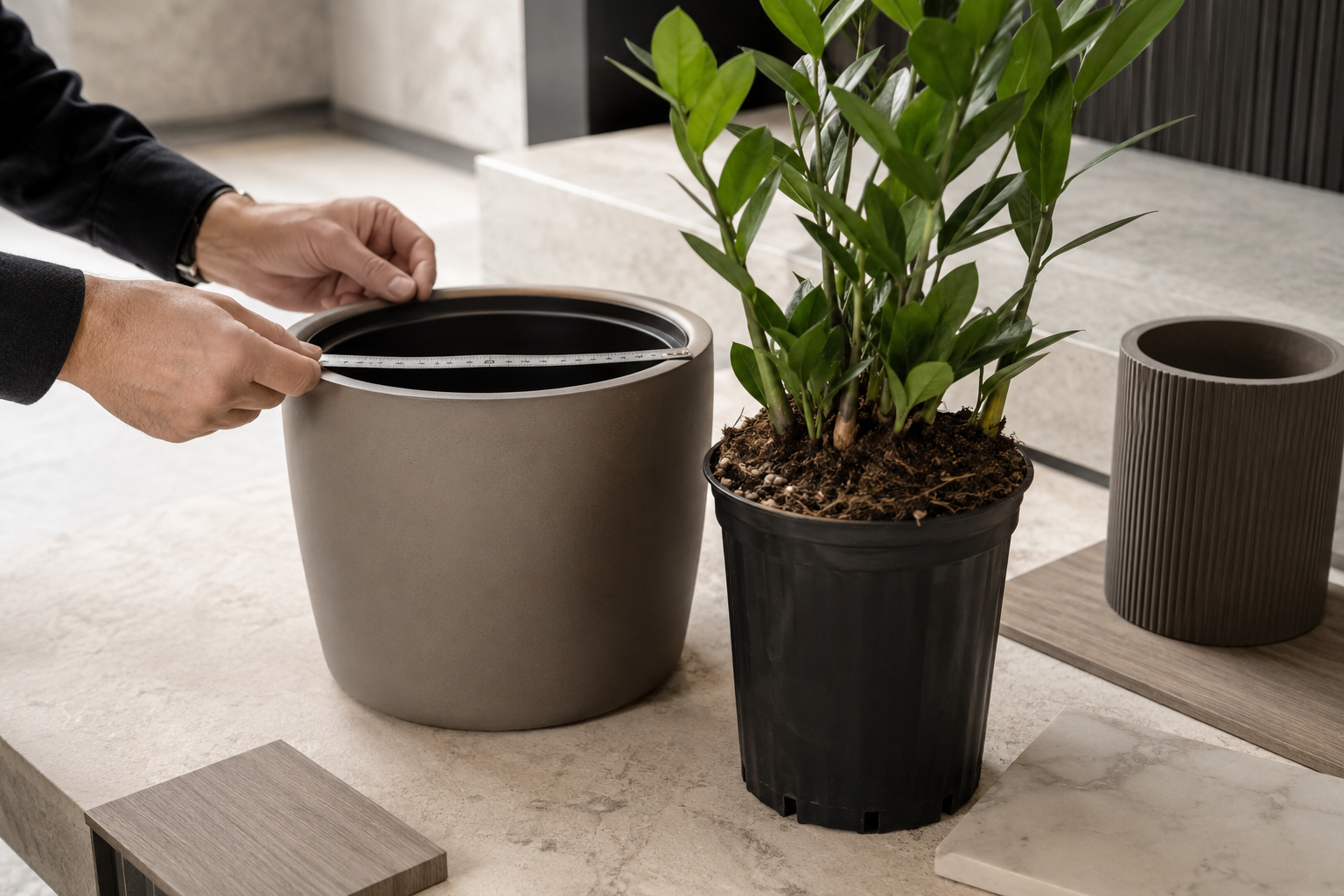
Indoor plant nursery pot size being checked against a decorative planter for project coordination

A common coordination problem occurs when a decorative planter is selected for its external dimensions without confirming the usable internal opening. Thick planter walls, tapered profiles, irrigation components, liners and internal platforms can all reduce the space available for the nursery pot.

For that reason, decorative planter selection and plant selection should be checked together. The plant needs enough room to fit correctly, while the planter must also allow practical installation, removal and future replacement.
4. Plant Form: The Shape Behind the Species Name

Different indoor plant forms showing variations in stem structure, density and maturity for specification approval

Plant form describes the structure and silhouette of the plant. It is one of the most important visual characteristics in a carefully designed interior.

A specimen with a single stem creates the expression of a tree and may preserve clearer sightlines at lower levels. A plant with multiple stems often feels softer and fuller. Palms with clustered canes can create vertical rhythm and screening, while a branched specimen may deliver a broader canopy and stronger focal presence.

When form matters to the concept, it should be stated. Otherwise, two technically correct plants of the same species and height can produce very different design outcomes.
5. Density and Maturity: Why Equal Height Does Not Mean Equal Presence

Maturity is difficult to reduce to one number. A taller plant is not automatically more mature in appearance.

Density can come from the number of stems, the amount of branching, leaf coverage, canopy depth and how long the specimen has been trained in the nursery. This is why two plants at 180 cm can vary significantly in visual presence and perceived quality.

For repeated planting, a consistent level of density helps create rhythm across the installation. For a statement specimen, maturity may be central to the design intent. A clear approval process is often more useful than trying to describe every visual characteristic in a schedule.

What to Check During Plant Approval

Plant approval is where the written schedule meets the reality of working with living material. Unlike manufactured finishes, plants are naturally variable. The purpose of approval is not to make every specimen identical. It is to confirm that the proposed plants sit within an acceptable visual and dimensional range.

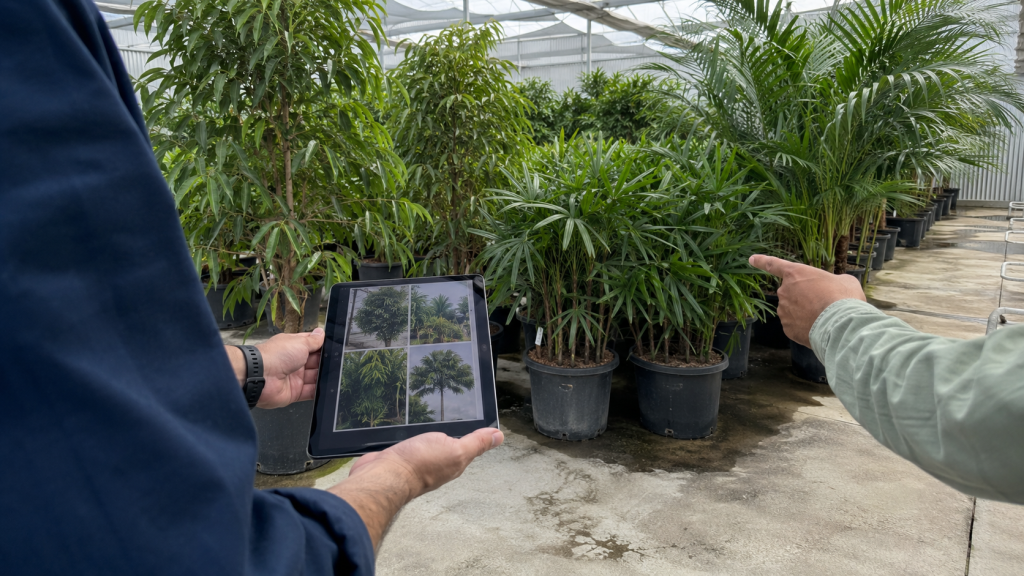
For standard repeated plants, representative photographs or a sample may be enough. For large statement trees or plants in visually critical locations, a nursery inspection can provide greater confidence before delivery.

During approval, look beyond the label. Check overall proportion, symmetry where appropriate, canopy density, stem structure, leaf condition, root stability and whether the nursery pot will fit the intended planter. Also consider how the plant will be moved into the building and positioned in its final location.

  • Does the plant have the intended height and proportion?
  • Is the canopy appropriately full for the space?
  • Does the stem or cane structure match the required form?
  • Will the nursery pot fit comfortably inside the approved planter?
  • Is the foliage healthy, clean and consistent in quality?
  • Can the plant be transported through the available access route?

Why Nursery Availability Still Matters

A specification should be precise enough to protect the design, but it also needs to recognise that plants are living nursery stock. Availability changes as plants grow, project timelines change and specimens are allocated.

This is where early communication with a specialist supplier becomes useful. With access to Wahat Al Sahraa NurseryPlantscapes can draw on established nursery capability while also assessing the practical availability of the sizes, forms and quantities required for a project.

If an exact specimen is unavailable, the conversation should not immediately become a simple species substitution. A good alternative should be reviewed against the original design criteria, including height, spread, form, density, light conditions and its relationship with the planter. The objective is to protect the visual and horticultural intent, even when the exact specimen changes.

What This Means for Architects, Designers and Procurement Teams

A stronger plant schedule makes comparisons easier. Consultants can review proposals against defined criteria. Procurement teams can compare equivalent proposals more accurately. Suppliers can identify availability gaps earlier. Designers gain more control over what the final installation will actually look like.

It also reduces the chance that a seemingly small difference in procurement becomes a visible design issue at handover. A plant that is technically the right species but significantly narrower, less mature or differently formed may still fail to deliver the intended spatial effect.

Plantscapes combines horticultural assessment with design and installation experience, including site surveys and plant selection based on factors such as available space, lighting, ventilation, temperature and humidity. That broader context is important because a plant specification should describe not only what the plant looks like, but also which plants are likely to perform well in the space.

Architect and horticultural specialist reviewing approved indoor plants at a UAE nursery before project delivery

Frequently Asked Questions

Is plant height enough to specify an indoor plant?

Usually not. Height is useful, but it does not describe canopy width, density, stem structure, root volume or overall form. For plants in visually prominent locations, these characteristics should also be considered.

Not by itself. The internal opening of the decorative planter, wall thickness, taper, liner, irrigation components and installation method all affect compatibility. Plant and planter dimensions should be checked together.

Plant form describes the way the specimen is structured and trained, such as a single stem, multiple stems, clustered canes or a branched form. Form has a major influence on the silhouette and visual weight of a plant.

For large statement plants or visually critical locations, approval through photographs, samples or a nursery inspection can be valuable. For repeated standard plants, approval of representative samples may be sufficient if the specification clearly defines the acceptable range.

A Better Specification Creates a Better Finished Space

For advice on a specific indoor planting project, Plantscapes can support plant selection, specification, supply, installation and ongoing care across commercial and hospitality interiors in the UAE.