


Indoor Plant Supply in the UAE: Building a More Reliable Sourcing Model for Fit Out Projects
Plant supply should support a project programme, not become another variable within it. This article looks at how Plantscapes combines UAE nursery capability, diversified regional sourcing and early coordination to create a more reliable supply model for fit out projects.
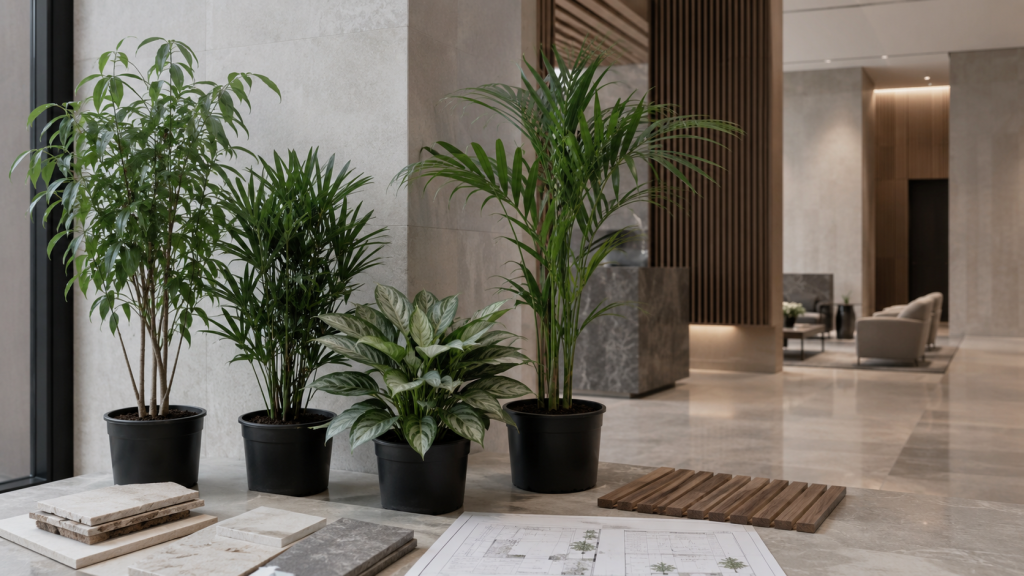
Indoor planting is often one of the final visible layers of a fit out, but the supply decisions behind it begin much earlier. When a project depends heavily on a narrow import route, changes in freight, availability, lead times or plant condition can quickly affect what arrives on site and when.
For architects, interior designers, consultants and contractors, this is not simply a procurement issue. It can influence planter sizing, installation sequencing, species selection, access planning and, ultimately, the quality of the finished space. A more resilient strategy for indoor plant supply in the UAE therefore needs to look beyond a single source and consider how nursery capability, regional specialist suppliers and project coordination work together.
Why dependence on imported plant supply can create project pressure
Imported plants remain an important part of the indoor landscaping market. Certain species, sizes and specialist forms are best sourced internationally, and there will always be projects that call for plants from established growers outside the UAE.
The challenge comes when an entire specification depends on a single origin, shipping window or supplier. If availability changes after approvals are complete, teams may face substitutions at a stage when planter dimensions, lighting conditions and interior finishes are already fixed. A late change that appears small on a plant schedule can create additional coordination across design, procurement and installation.
This is why supply resilience matters. The objective is not to remove imported material from a project. It is to avoid making the project unnecessarily dependent on a single chain.
A stronger response starts closer to the project
Plantscapes can draw on the wider Desert Group nursery network, including Wahat Al Sahraa Nursery, alongside regional and international specialist suppliers. Wahat Al Sahraa states that it operates more than 10 million square feet of nursery land in the UAE and stocks over 4,000 varieties across tropical, subtropical, native and adaptive plants. That local scale gives project teams greater flexibility when reviewing availability, size ranges and alternatives for a live project.
For indoor schemes, this can be particularly useful when the design requires a combination of statement plants, freestanding plants, screening plants and smaller supporting species. Rather than treating every item as an isolated import decision, the supply strategy can be assembled from the most appropriate source for each requirement.
This gives the project team more room to respond if one supply route becomes constrained, while still protecting the overall planting concept.
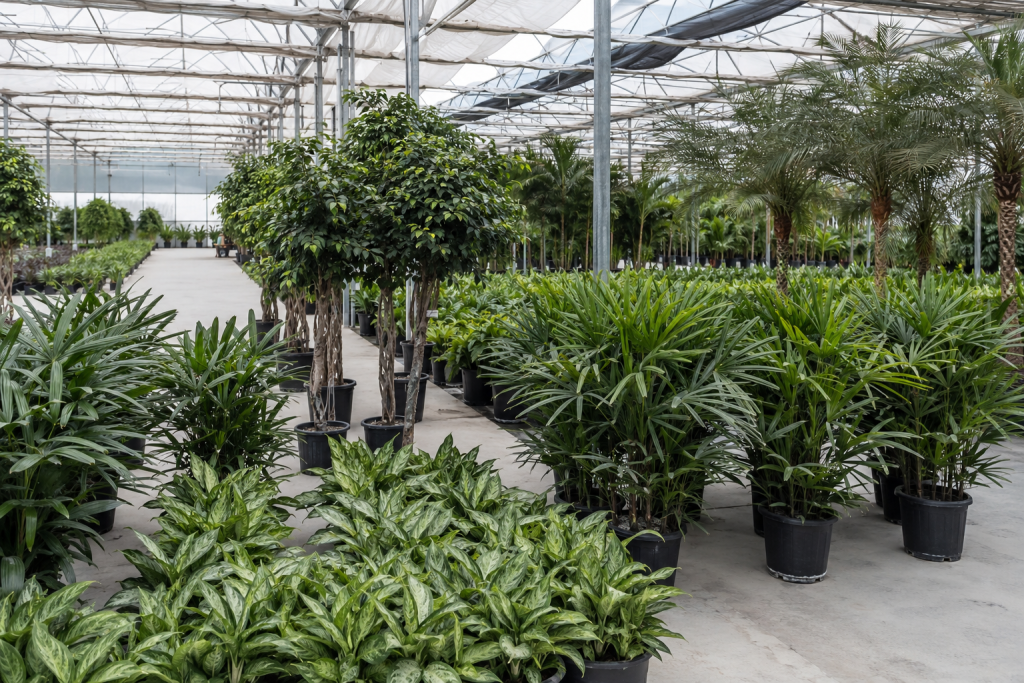
Diversified regional sourcing adds flexibility
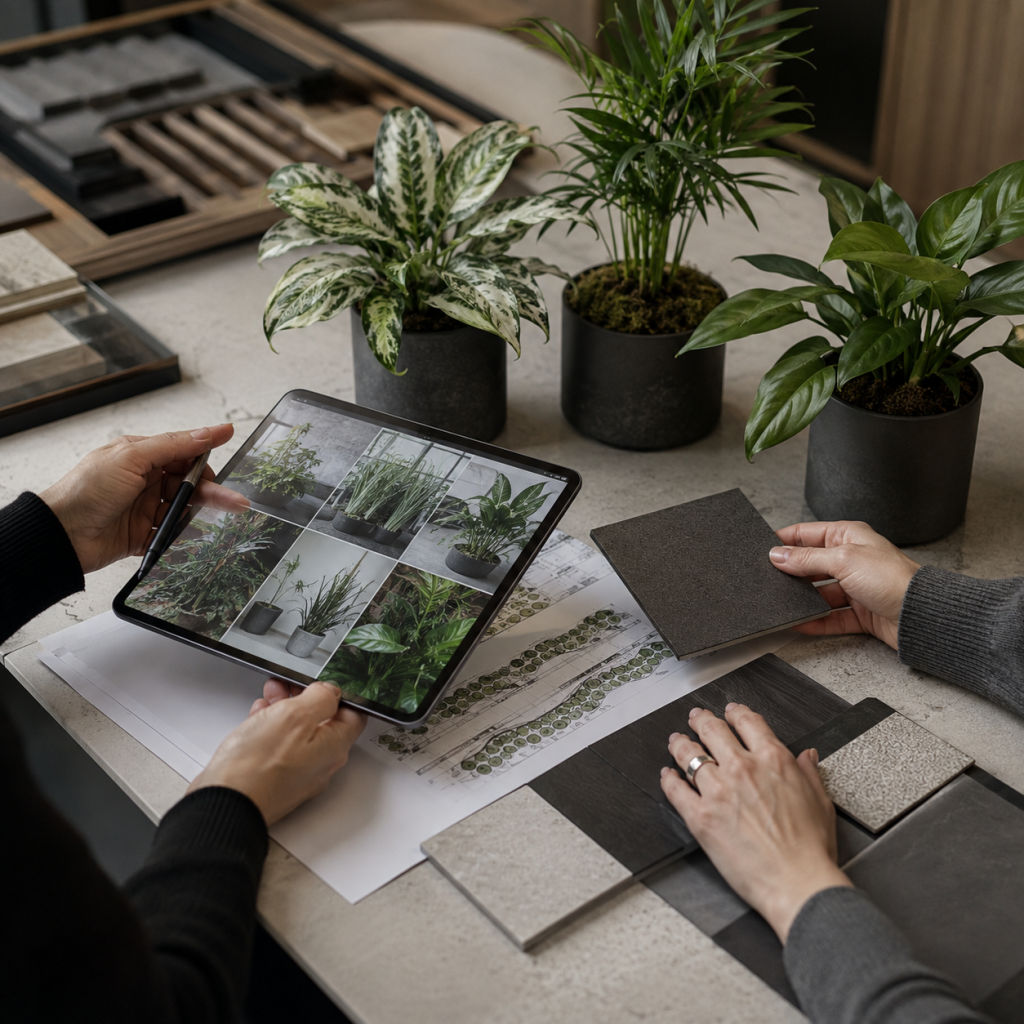
Local nursery capability is one part of the model. The second is access to a wider network of specialist growers and suppliers across the region and beyond.
Different growers have different strengths. One may specialise in a particular Ficus form, another in palms, another in preserved plants, and another in a specific size range or finish. A diversified sourcing approach allows the specification to be matched to those strengths rather than forcing every requirement through the same supply channel.
For the client, the benefit is not complexity. It is controlled flexibility. Plantscapes can review what the design is trying to achieve, what is realistically available, and where equivalent options can be considered before procurement becomes urgent.
What a resilient approach to indoor plant supply in the UAE means for project timelines
Planting is closely connected to other fit out activities. Large planters need access. Built in planters may need drainage or irrigation coordination. Species need to suit the available light. Delivery may need to follow furniture installation, floor protection or final cleaning.
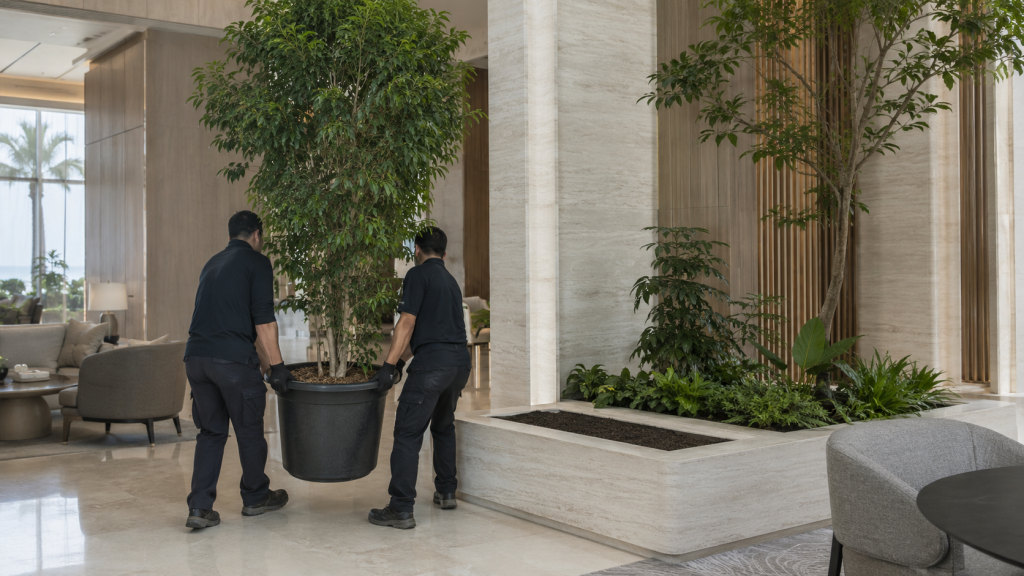
When sourcing is considered early, the planting package can be coordinated around those realities. Long lead items can be identified sooner. Locally available material can be reserved where appropriate. Alternatives can be reviewed before approvals are finalised. Delivery sequences can be planned around the actual site programme.
This does not remove every supply variable, but it reduces the number of decisions that need to be made under time pressure. That is where a more resilient approach to indoor plant supply in the UAE creates practical value.
Reliability is also about what happens after delivery
A plant arriving on time is only one part of a successful interior planting package. It also needs to arrive in suitable condition, be installed correctly, settle into the space and remain healthy after handover.
Plantscapes supports indoor plant supply and installation with ongoing professional maintenance through annual maintenance contracts. This creates continuity between the plant selected for the design, the way it is installed and the way it is cared for once the space is operational.
That continuity matters because the best sourcing decision is not simply the plant that can be delivered fastest. It is the plant that suits the design intent, the environmental conditions, the planter and the long term maintenance needs.
From reactive procurement to proactive supply planning
The most effective shift is a simple one: move plant sourcing conversations earlier in the fit out process.
When Plantscapes is involved before the plant schedule is fully finalised, the team can review likely availability, identify where specialist sourcing may be required, suggest suitable alternatives and highlight items that may require longer lead times. This gives designers and consultants more information while the specification is still flexible.
It also helps protect design intent. A substitution does not have to compromise the design when it is considered deliberately. A replacement species can be evaluated for scale, leaf form, density, light tolerance and visual role, rather than selected purely because it is available at the last minute.
A more resilient model for indoor planting
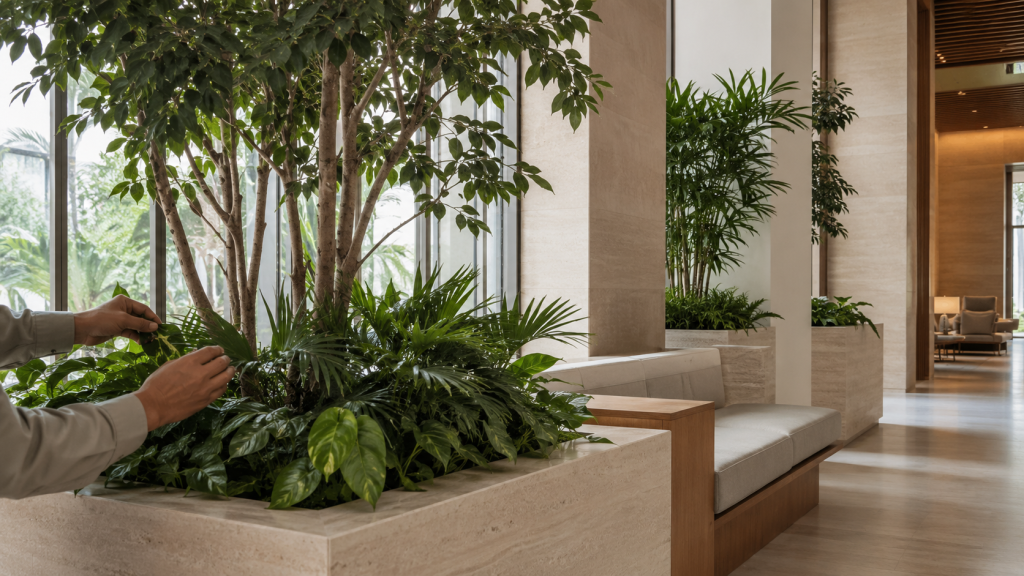
Regional supply conditions will continue to change. The more useful question for project teams is not whether every plant can be sourced locally or whether imports can be avoided altogether. It is whether the planting package has sufficient flexibility and a broad enough supplier network to respond when conditions shift.
By combining UAE nursery capability, diversified specialist sourcing, design coordination, installation and ongoing care, Plantscapes can support a more coordinated approach to indoor planting procurement.
For project teams, that means clearer options, earlier decisions and a supply strategy designed around the programme rather than added to it at the end.